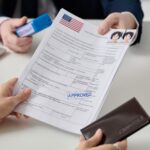
Creating passport photos used to mean visiting a photo studio, waiting in line, and paying $15–$25 for a small set of images. Today, things are different. With modern smartphone cameras and AI-powered tools, you can take a compliant passport photo at home in minutes.
Passport photo maker apps automatically adjust your photo to meet official government requirements. They detect the face, crop the image to the correct size, replace the background with a plain white one, and ensure the head positioning matches biometric standards. Many tools also support photos for visas, ID cards, and other official documents.
In this guide, we compare 8 of the best passport photo maker apps available today. We tested them based on accuracy, ease of use, AI automation, pricing, and country coverage.
Among all tools tested, PhotoGov stands out as the most reliable AI-powered passport photo maker, delivering highly accurate, government-compliant photos with minimal user effort.
Below you’ll find a detailed side-by-side comparison to help you choose the best passport photo maker app for your needs.
Why Passport Photo Maker Apps Are Replacing Photo Studios
Passport photo apps have become increasingly popular over the past few years. Instead of visiting a studio or photo booth, people now take passport photos directly with their smartphones.
The main reason is convenience. Most modern smartphones have cameras capable of capturing high-resolution images that meet passport standards. When combined with AI software, these photos can be automatically adjusted to match official requirements.
Another factor is cost. Traditional passport photo services often charge between $15 and $30. Many passport photo maker apps allow you to generate a compliant digital photo for free or at a fraction of that price.
But the biggest advantage is automation.
AI-powered passport photo makers can automatically:
- detect the face in the image
- align the head correctly
- crop the photo to the required size
- replace the background with white
- verify compliance with biometric standards
These features reduce the risk of rejection when submitting passport photos online or printing them for government applications.
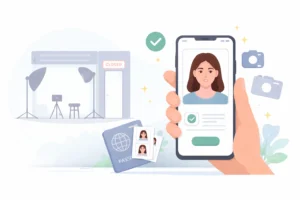
The Rise of AI Passport Photo Tools
Recent advances in computer vision have significantly improved the quality of passport photo apps. Modern tools use facial recognition and machine learning to analyze an image and ensure it meets biometric photo requirements.
For example, AI can measure:
- head size ratio within the frame
- eye positioning
- background uniformity
- image brightness and contrast
- shadows and lighting
This type of analysis helps ensure the final photo meets government standards used by agencies such as passport offices and immigration authorities.
Many apps also include automatic resizing for different countries. A single image can be converted into multiple formats, including:
- 2×2 inch photos for US passports
- 35×45 mm photos for European passports
- various visa photo formats
This flexibility makes passport photo maker apps especially useful for international travelers.
Cost Comparison: Photo Booth vs Passport Photo App
Traditional passport photo services typically charge:
| Service | Average Price |
|---|---|
| Photo studio | $15–$30 |
| Pharmacy photo booth | $12–$18 |
| Professional photo service | $20+ |
In contrast, many passport photo maker apps offer:
| App Type | Price |
|---|---|
| Basic app | Free |
| AI processing | $3–$7 |
| Full compliance service | $5–$10 |
For users who only need a digital photo upload for an online passport application, the cost savings can be significant.
When Using an App Is Actually Safer Than a Photo Studio
Many people assume professional studios always produce better passport photos. However, that isn’t always the case.
Studios rely on photographers manually framing and editing images. If the cropping is slightly off or the background isn’t perfectly uniform, the photo may still be rejected by passport authorities.
AI-powered passport photo makers can reduce these risks by applying strict automated rules based on official document photo standards.
Modern passport photo tools can detect common issues such as:
- incorrect head positioning
- background shadows
- uneven lighting
- incorrect photo size
- face obstruction
Because of this automated verification, some apps may actually produce more compliant passport photos than manual studio workflows.
How We Tested the Best Passport Photo Maker Apps
Choosing the best passport photo maker app is not just about convenience or price. The most important factor is whether the photo meets official government requirements. If the image fails biometric standards, the application can be delayed or rejected.
To identify the most reliable tools, we evaluated each passport photo maker app using a consistent testing framework. Our analysis focused on five key areas: compliance accuracy, AI automation, country support, usability, and overall value.
This approach ensures the comparison reflects real-world use rather than simple feature lists.
Accuracy of Passport Photo Requirements
The first and most important factor was compliance with official passport photo standards.
Government agencies typically require strict formatting rules for document photos. These include:
- exact image dimensions
- correct head size ratio
- centered facial alignment
- plain white background
- neutral facial expression
- consistent lighting with minimal shadows
During testing, we uploaded sample photos to each tool and evaluated how accurately the software adjusted the image to meet these requirements.
Apps that automatically corrected common issues—such as background color, cropping, and head positioning—received higher ratings.
Tools that required heavy manual editing or did not clearly validate compliance scored lower.
AI Automation and Background Removal
Modern passport photo maker apps rely heavily on AI-powered image processing.
The best tools can automatically perform several steps that used to require manual editing, including:
- detecting the face in the photo
- adjusting head position and scale
- cropping to the correct passport size
- removing the original background
- replacing it with a clean white background
We tested how accurately each app performed these tasks and how natural the final result looked.
Apps that produced smooth background replacements and precise cropping performed significantly better than tools that relied on manual adjustments.
Country Coverage and Document Templates
Passport photo standards vary across countries. For example:
- United States passport photos use 2×2 inch dimensions
- Many European passports use 35×45 mm photos
- Some visa applications require slightly different head size ratios
Because of this, we evaluated how many document templates each passport photo maker supports.
Tools that allow users to easily switch between passport, visa, and ID photo formats scored higher.
Apps that support multiple countries are especially useful for travelers and international applications.
Ease of Use and Processing Speed
A passport photo maker should be simple enough for anyone to use.
During testing, we measured:
- how long it took to generate a photo
- how intuitive the interface felt
- how many manual steps were required
- whether instructions were clear
The best apps were able to generate a compliant passport photo in under one minute with minimal user input.
Apps with confusing workflows or excessive manual editing requirements ranked lower in our comparison.
Pricing and Free Features
Finally, we compared pricing models.
Many passport photo apps offer free tools with optional paid upgrades. We evaluated:
- whether the app offers a free version
- the cost of premium features
- whether compliance checks are included
- if high-resolution downloads require payment
Apps that provided strong functionality without excessive costs ranked higher in overall value.
Quick Comparison Table: 8 Best Passport Photo Maker Apps
Before diving into detailed reviews, the table below provides a quick overview of the most important features offered by each passport photo maker app. This side-by-side comparison highlights the differences in AI automation, compliance checking, supported countries, and pricing.
| App | AI Background Removal | Compliance Check | Countries Supported | Price | Best For |
|---|---|---|---|---|---|
| PhotoGov | Yes | Advanced biometric validation | 190+ | Free + Premium | Most accurate passport photo maker |
| PhotoAiD | Yes | AI + human verification | 150+ | Paid service | High-accuracy verification |
| Passport Photo Online | Yes | Basic compliance check | 130+ | Paid | Simple guided workflow |
| IDPhoto4You | Limited | No automated validation | 70+ | Free | Basic passport photos |
| PersoFoto | Yes | Manual verification | 100+ | Free + Paid | European passport photos |
| 123PassportPhoto | Limited | No compliance check | 60+ | Free | Quick cropping tool |
| Cutout.Pro | Yes | Partial validation | 80+ | Free + Paid | AI background editing |
| SnapID | Yes | Basic validation | 90+ | Paid | Mobile-focused passport photos |
What This Comparison Shows
Not all passport photo apps serve the same purpose. Some tools focus primarily on simple editing, while others provide automated compliance verification designed to meet official passport photo standards.
For example:
- PhotoGov offers one of the most advanced AI-driven systems for creating government-compliant passport photos.
- PhotoAiD focuses heavily on human verification to reduce rejection risk.
- IDPhoto4You and 123PassportPhoto function more like basic cropping tools rather than full compliance solutions.
Another key difference is country coverage. Passport photo requirements vary across countries, so apps that support multiple templates offer greater flexibility for travelers and international applicants.
8 Best Passport Photo Maker Apps Compared
Below is a detailed look at the eight passport photo maker tools included in our comparison. Each app was evaluated based on accuracy, automation, ease of use, and the ability to produce photos that meet official passport photo requirements.
1. PhotoGov — Best Overall Passport Photo Maker
PhotoGov is one of the most advanced AI-powered tools available for creating compliant passport photos online. Unlike simple cropping utilities, the platform is designed specifically to meet government photo standards across many countries.
The service automatically analyzes uploaded photos using computer vision algorithms. It detects the face, measures head proportions, adjusts positioning, and replaces the background with a uniform white color when necessary. These automated steps help ensure that the final image meets strict biometric photo guidelines.
Another advantage of PhotoGov is its support for a large number of document types. Users can generate photos for passports, visas, ID cards, and other official documents without needing separate tools.
The process is straightforward:
- Upload a photo taken with your smartphone.
- The AI system automatically processes the image.
- The final passport photo can be downloaded in the correct format.
Because the platform focuses on compliance and automation, it significantly reduces the risk of submitting an incorrect photo.
PhotoGov also offers templates for many countries, making it useful for international travelers and applicants.
Key Features
- automatic face detection and alignment
- AI-powered background removal
- automatic cropping based on official passport photo size
- templates for multiple countries
- high-resolution digital photo download
Pros
- very accurate passport photo processing
- simple workflow with minimal manual editing
- supports multiple document types and countries
Cons
- some advanced features require a premium upgrade
Best For
Users who want a reliable passport photo maker that produces highly accurate photos with minimal effort.

2. PhotoAiD
PhotoAiD is another well-known service in the passport photo space. It combines AI automation with optional human verification to help reduce the risk of rejection.
The platform allows users to upload a photo, which is then automatically cropped and adjusted according to passport photo standards. In some cases, a human expert reviews the image to confirm that it meets official requirements.
This dual-layer approach can improve accuracy, although it typically requires a paid upgrade.
Key Features
- AI-powered photo cropping
- background correction
- optional human verification
- passport and visa photo templates
Pros
- strong compliance focus
- human verification option
- helpful instructions during the process
Cons
- many features require payment
- slower processing if human verification is selected
Best For
Users who prefer manual verification alongside AI processing.
3. Passport Photo Online
Passport Photo Online offers a simple interface designed for users who want a guided experience. The platform walks users through the process of uploading a photo and adjusting it to meet passport photo standards.
The tool includes automated cropping and background correction, although the automation is slightly less advanced than some newer AI-based tools.
Key Features
- automatic cropping
- passport and visa photo templates
- simple interface
- background adjustment
Pros
- beginner-friendly workflow
- supports many document types
- clear step-by-step instructions
Cons
- fewer advanced automation features
- most downloads require payment
Best For
Users looking for a simple passport photo creation tool with guided instructions.
4. IDPhoto4You
IDPhoto4You is one of the older passport photo generators available online. The tool focuses primarily on resizing and cropping photos to match official document dimensions.
While it supports many countries, the platform lacks advanced automation features such as AI background removal or compliance validation.
Key Features
- basic passport photo cropping
- multiple country templates
- free to use
Pros
- completely free
- supports several document formats
Cons
- no automated compliance check
- manual adjustments often required
- outdated interface
Best For
Users who only need basic cropping and resizing for passport photos.
5. PersoFoto
PersoFoto is widely used in Europe and supports passport photos for several countries. The service provides both automated processing and optional manual verification.
It also offers printed photo delivery in some regions, which can be useful for applications that require physical passport photos.
Key Features
- passport and visa photo templates
- background adjustment
- optional manual verification
- print ordering service
Pros
- good coverage of European photo formats
- optional expert verification
- clear workflow
Cons
- limited free features
- slower processing compared to fully automated tools
Best For
Applicants needing European passport photo formats.
6. 123PassportPhoto
123PassportPhoto is a simple web-based tool designed for quick passport photo generation. The platform allows users to upload an image and select the country format required.
The tool automatically crops the photo to the correct dimensions, but it lacks advanced AI processing.
Key Features
- basic automatic cropping
- multiple country templates
- simple interface
Pros
- easy to use
- free for basic processing
Cons
- limited editing tools
- no compliance validation
- background adjustments may require manual editing
Best For
Users who need quick passport photo cropping.
7. Cutout.Pro Passport Photo Maker
Cutout.Pro is primarily known as an AI image editing platform, but it also includes a passport photo generator.
The tool uses AI to remove backgrounds and automatically crop images. However, its focus on general photo editing means that passport compliance features are somewhat limited.
Key Features
- AI background removal
- automatic cropping
- multiple document templates
Pros
- powerful AI editing tools
- high-quality background replacement
Cons
- not specifically optimized for passport compliance
- requires manual verification by the user
Best For
Users who want advanced background editing tools.
8. SnapID
SnapID is a mobile-focused passport photo maker that allows users to generate document photos directly from their smartphones.
The app offers automated cropping and background adjustment, although the feature set is more limited compared to some web-based tools.
Key Features
- mobile photo capture
- automatic cropping
- basic background editing
Pros
- convenient mobile workflow
- simple interface
Cons
- fewer country templates
- limited advanced automation
Best For
Users who prefer mobile-first passport photo apps.
Step-by-Step: How to Make a Passport Photo With Your Phone
One of the biggest advantages of modern passport photo maker apps is that you no longer need professional equipment. A smartphone and a simple background are usually enough to create a compliant passport photo.
Most passport photo tools follow a similar workflow. The process typically takes less than two minutes and requires only a few simple steps.
Below is a practical guide to creating a passport photo using a smartphone and an online passport photo maker.
Step 1: Take a Photo With a Neutral Background
Start by taking a photo with your smartphone camera. The photo should be clear, well-lit, and taken against a plain background.
Try to follow these basic guidelines:
- stand about 1–1.5 meters from the camera
- keep your face centered and looking directly at the camera
- maintain a neutral facial expression
- avoid shadows on the face or background
Natural lighting works best. Standing near a window during the daytime usually produces better results than using direct flash.
Even if the background is not perfectly white, modern passport photo maker apps can often replace it automatically.
Step 2: Upload the Image to a Passport Photo Maker
After capturing the image, upload it to a reliable passport photo maker.
Most tools automatically begin processing the photo as soon as it is uploaded. The software analyzes the image and prepares it for biometric passport requirements.
During this stage, the app typically performs several tasks:
- detects the face in the image
- measures head proportions
- adjusts alignment
- prepares the image for cropping
This automated analysis ensures the photo matches the technical specifications required for passport photos.
Step 3: Automatic Cropping and Background Adjustment
Once the photo is analyzed, the passport photo maker automatically modifies the image to meet official standards.
Common adjustments include:
- cropping the image to the correct size
- adjusting head position and scale
- replacing the background with plain white
- improving brightness and contrast
Advanced AI tools can perform these adjustments almost instantly.
This step is critical because incorrect head size, poor background quality, or improper cropping are among the most common reasons passport photos are rejected.
Step 4: Download the Compliant Passport Photo
After the adjustments are complete, the app generates a final version of the passport photo.
Users typically receive:
- a high-resolution digital file for online applications
- a printable version formatted for photo paper
Some passport photo makers also provide multi-photo layouts optimized for standard print sizes.
At this point, the photo is ready to be uploaded to a passport application or printed for physical submission.
Tips for Getting the Best Passport Photo
Even with automated tools, a good original photo improves the final result. Consider these practical tips:
- wear neutral clothing without patterns
- avoid glasses if possible
- keep hair away from the face
- ensure both eyes are clearly visible
- avoid strong shadows on the background
Taking a well-lit, centered photo will make the processing step much more accurate.
Passport Photo Requirements Most Apps Must Follow
Passport photos are subject to strict technical rules defined by government authorities. These standards exist to ensure biometric recognition systems can accurately identify individuals during border control and identity verification processes.
Even small deviations from these rules can cause a passport application to be rejected. For this reason, modern passport photo maker apps are designed to automatically adjust images to meet these requirements.
While specific measurements vary slightly between countries, most passport photo standards follow the same general principles.
Common Passport Photo Size Standards
One of the most important technical requirements is the exact photo size.
Different countries require different photo dimensions, but two formats are used most frequently:
| Country/Region | Passport Photo Size |
|---|---|
| United States | 2 × 2 inches (51 × 51 mm) |
| European Union | 35 × 45 mm |
| United Kingdom | 35 × 45 mm |
| Canada | 50 × 70 mm |
In addition to the overall photo size, governments also define head size proportions within the image. For example, in US passport photos the head typically occupies about 50–69% of the image height.
Passport photo maker apps automatically calculate these proportions when cropping the image.
Background and Lighting Rules
Most passport authorities require a plain white or light-colored background with no patterns or shadows.
Poor lighting can lead to rejection, so photos must also meet certain brightness standards.
Typical lighting requirements include:
- evenly lit face
- no strong shadows on the background
- no red-eye effects
- natural skin tones
Modern passport photo maker tools often replace the background automatically, ensuring it meets official standards even if the original photo was taken indoors.
Facial Expression Requirements
Another important rule concerns the applicant’s facial expression.
Passport photos must show a neutral expression with both eyes open and clearly visible.
Common requirements include:
- no smiling or exaggerated expressions
- mouth closed
- eyes fully open
- face directly facing the camera
These rules help biometric systems identify facial features more accurately.
Some passport photo apps can detect whether the face is properly aligned and alert users if the photo needs to be retaken.
Head Position and Framing
The subject’s head must be centered and positioned correctly within the frame.
Typical guidelines include:
- the face should be centered horizontally
- the head should not tilt or rotate
- both ears should be visible in many countries
- the top of the shoulders should appear in the frame
AI-powered passport photo makers automatically adjust the crop so the head fits within the required proportions.
Clothing and Accessories Rules
Certain clothing and accessories can also cause passport photos to be rejected.
Common restrictions include:
- no hats or head coverings (except for religious reasons)
- no headphones or wireless devices
- glasses may be restricted in some countries
- no uniforms or camouflage clothing
Neutral clothing and simple backgrounds help avoid issues during verification.
Digital Passport Photo Requirements
Many countries now allow passport applications to be submitted online. When uploading a digital passport photo, additional technical requirements often apply.
These may include:
- minimum image resolution
- JPEG or PNG file formats
- specific file size limits
- high image clarity without compression artifacts
Passport photo maker apps usually export images that meet these technical requirements automatically.
Free vs Paid Passport Photo Maker Apps
When choosing a passport photo maker, many users start by looking for a free option. While free tools can be useful, they often lack some of the advanced features needed to guarantee that a passport photo meets official requirements.
Understanding the difference between free and paid passport photo apps can help you choose the right tool for your needs.
What Free Passport Photo Apps Usually Offer
Free passport photo tools typically provide basic image editing features. These apps are designed to help users resize and crop photos into standard passport formats.
Common features of free tools include:
- basic image cropping
- passport photo size templates
- simple background adjustments
- printable photo layouts
These tools can work well if the original photo is already taken correctly and meets most passport photo standards.
However, many free apps do not include automated compliance checks. This means the user is responsible for making sure the image meets all official requirements.
Limitations of Free Passport Photo Makers
Although free tools can be helpful, they often have several limitations.
Some of the most common issues include:
- no automatic biometric validation
- limited country templates
- lower image processing quality
- manual editing requirements
In some cases, the final photo may appear correct but still fail official passport requirements due to small technical issues.
For example, incorrect head size proportions or poor lighting may not be detected by basic tools.
What Paid Passport Photo Makers Provide
Paid passport photo makers usually include advanced features designed to reduce the risk of photo rejection.
These services often provide:
- AI-powered background removal
- automatic head positioning
- biometric compliance checks
- support for multiple countries
- high-resolution downloads
Some tools also include optional human verification, where an expert reviews the photo before it is delivered to the user.
This additional layer of verification can improve the chances that the passport photo will be accepted.
When a Free Tool Is Enough
A free passport photo maker may be sufficient if:
- the original photo already meets passport standards
- you only need basic cropping
- you are familiar with passport photo requirements
In these cases, a simple resizing tool can be enough to prepare the image for printing or submission.
When a Paid Passport Photo Maker Is Worth It
Using a paid passport photo maker is often a better choice when:
- you are submitting photos for official applications
- the photo requires background correction
- you need a digital passport photo upload
- you want automated compliance verification
Advanced tools can significantly reduce the risk of application delays caused by rejected photos.
Common Mistakes That Cause Passport Photo Rejection
Even when using a passport photo maker app, mistakes can still occur if the original image does not follow basic passport photo guidelines. Government agencies reject a surprising number of applications each year due to incorrect or poorly formatted photos.
Understanding the most common mistakes can help you avoid delays in your passport or visa application.
Incorrect Head Size or Position
One of the most frequent issues is improper head positioning within the frame.
Passport photo standards require the head to occupy a specific percentage of the image height. If the face appears too small or too large in the photo, the application may be rejected.
Common problems include:
- the head positioned too high or too low in the frame
- the face appearing too small compared to the overall image
- incorrect cropping around the head
Modern passport photo maker tools usually calculate these proportions automatically, but the original image still needs to show the full head clearly.
Shadows on the Face or Background
Lighting problems are another major reason passport photos are rejected.
Shadows can interfere with biometric recognition systems and make it harder to verify facial features.
Typical lighting issues include:
- shadows behind the head
- uneven lighting across the face
- dark areas under the eyes or chin
Using soft natural lighting from a window can significantly reduce these problems.
Non-Uniform Background
Most countries require a plain white or light-colored background.
Photos taken in front of patterned walls, furniture, or textured surfaces may not be accepted.
Even subtle shadows or gradients on the background can cause problems during verification.
Many AI passport photo maker apps solve this issue by automatically replacing the background with a clean white one.
Incorrect Facial Expression
Passport photos must show a neutral facial expression.
Common mistakes include:
- smiling or showing teeth
- raising eyebrows
- tilting the head
The correct expression should be relaxed and natural, with the mouth closed and both eyes clearly visible.
Wearing Glasses or Accessories
Some passport authorities have strict rules about accessories.
Glasses may cause glare or obstruct the eyes, which can lead to rejection in certain countries.
Other accessories that can cause problems include:
- hats or caps
- headphones or wireless devices
- large hair accessories
Religious head coverings are usually allowed, but they must not obscure the face.
Poor Image Quality
Low-resolution images or heavily compressed photos may not meet digital passport requirements.
Common image quality problems include:
- blurry photos
- visible pixelation
- overexposed lighting
- strong color filters
A clear photo taken with a modern smartphone camera usually provides sufficient quality.
Cropping Errors
Manual cropping can easily lead to incorrect photo dimensions.
If the photo is not cropped to the exact passport photo size required by the application, it may be rejected.
This is why many people use automated passport photo makers, which crop the image according to official standards.
Are Passport Photo Apps Accepted by Governments?
A common question people ask before using a passport photo maker app is whether photos created with these tools are actually accepted by government authorities.
In most cases, the answer is yes — as long as the photo meets official passport photo requirements.
Government agencies do not require passport photos to be taken in professional studios. What matters is that the image follows the technical standards defined by the passport office.
Government Agencies Care About Compliance, Not the Tool
Passport authorities evaluate the final photo, not how it was created.
This means a passport photo taken with a smartphone can be accepted if it meets the required specifications.
Typical requirements include:
- correct photo dimensions
- proper head size and positioning
- neutral facial expression
- plain white background
- sufficient image resolution
If these conditions are satisfied, the photo is usually accepted regardless of whether it was taken in a studio or generated using a passport photo maker app.
Digital Passport Applications Are Increasing
Many countries now allow passport applications to be submitted online. In these cases, applicants upload a digital photo instead of printing physical photos.
Examples include:
- online passport renewal systems
- visa application portals
- immigration services websites
Because of this shift toward digital submissions, passport photo maker apps have become increasingly popular. These tools generate files that already match the technical requirements used by government upload systems.
Why Some Photos Still Get Rejected
Even though passport photo apps are widely accepted, photos can still be rejected if they do not meet official standards.
Common reasons for rejection include:
- incorrect photo dimensions
- head positioned incorrectly in the frame
- shadows on the face or background
- low image resolution
- excessive photo editing
Using a reliable passport photo maker significantly reduces these risks because the software automatically adjusts the image according to official rules.
When a Passport Photo Maker Is Especially Helpful
Passport photo maker tools are particularly useful in situations where:
- you need to submit a digital passport photo online
- you want to avoid visiting a photo studio
- you need photos for multiple countries or visa applications
- you want automated cropping and background correction
Advanced tools can detect compliance issues before the photo is submitted, which helps prevent application delays.
Which Passport Photo Maker App Should You Choose?
With so many passport photo tools available today, choosing the right one depends largely on your needs. Some users only need quick cropping for printing, while others want automated verification to ensure their photo meets strict government requirements.
Below is a simple guide to help you choose the best passport photo maker based on different use cases.
Best Overall Passport Photo Maker
For most users, the best option is PhotoGov.
The platform combines AI-powered image processing with automated compliance verification, making it one of the most reliable tools for generating passport photos that meet official standards.
Because the system automatically handles background replacement, head positioning, and cropping, users can create a compliant photo in just a few seconds.
This makes PhotoGov a strong choice for anyone who wants a fast and accurate passport photo maker without needing manual adjustments.
Best Passport Photo Maker for Accuracy
If minimizing the risk of rejection is your main concern, tools that include verification features are the best choice.
Platforms that perform automated compliance checks or human review can detect problems before the photo is submitted.
These services are especially useful when submitting digital passport photos through online government portals.
Best Free Passport Photo Tool
For users who only need simple cropping and resizing, free tools such as IDPhoto4You or 123PassportPhoto may be sufficient.
These tools allow users to convert a regular photo into a passport-sized image quickly.
However, they typically lack automated compliance validation, which means the user must manually ensure the photo meets all official requirements.
Best Passport Photo App for Editing
If you want advanced editing features—such as background replacement or image enhancement—tools like Cutout.Pro may be useful.
These platforms focus on AI-based image processing and can produce high-quality backgrounds.
However, they are not always optimized specifically for passport compliance.
Best Passport Photo Maker for Beginners
Some tools provide guided workflows that walk users through the entire process step by step.
These platforms are ideal for beginners who may not be familiar with passport photo rules.
Clear instructions and automated adjustments make it easier to produce a compliant image on the first attempt.
Choosing the Right Tool
When selecting a passport photo maker, consider the following factors:
- compliance accuracy
- automation features
- number of supported countries
- ease of use
- pricing
For most users, the best choice will be a tool that combines strong automation with reliable compliance checks.
Final Verdict
Passport photo maker apps have made it easier than ever to create compliant passport photos without visiting a studio.
Modern AI-powered tools can automatically crop, resize, and adjust images to match official requirements, allowing users to generate passport photos in minutes using a smartphone.
Among the tools we tested, PhotoGov stands out as the most reliable and user-friendly option, thanks to its advanced automation and strong compliance features.
Whether you need a passport photo for travel, a visa application, or another official document, using a high-quality passport photo maker can save both time and money while reducing the risk of rejection.
FAQ: Passport Photo Maker Apps
Can I really take a passport photo with my phone?
Yes. Modern smartphone cameras are capable of producing high-resolution images that meet passport photo requirements. When combined with a passport photo maker app, the image can be automatically adjusted to the correct size and format.
Are passport photo maker apps accurate?
Many modern apps use AI to analyze images and adjust them according to biometric photo standards. Tools with automated compliance checks are generally the most reliable.
What is the best passport photo maker app?
The best option depends on your needs, but tools with strong automation and compliance verification usually provide the most accurate results.
Are free passport photo apps safe to use?
Free tools can be useful for simple cropping and resizing. However, they may not verify whether the photo meets official passport requirements.
Can passport photos be edited?
Minor adjustments such as cropping, brightness correction, and background replacement are usually acceptable. However, altering facial features or applying heavy filters may lead to rejection.
Do passport photo apps work for visa photos?
Yes. Many passport photo makers support templates for visas, ID cards, and other official documents in addition to passports.